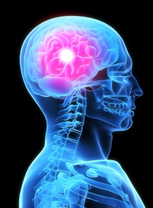
 Gliomas (tumours within the brain) are remarkably aggressive malignant types of cancer, typically leading to the death of impaired patients within one to 2 years following designation. There is no cure for gliomas and most available treatments give solely minor symptomatic relief.
A study of the trendy scientific literature unveils various diagnosing investigations and one pilot clinical study illustrating cannabinoids' ability to act as antineoplastic agents, significantly on brain tumor cell lines.
Writing in the September 1998 issue of the journal FEBS Letters, researchers at Madrid's Complutense University, School of Biology, first reported that Delta-9-THC induced apoptosis (programmed cell death) in glioma cells in culture. Researchers followed up their initial conclusions in 2000, reporting that the administration of both THC and the synthetic cannabinoid agonist WIN 55,212-2 "induced significant regression of malignant gliomas" in animals.
Researchers again verified cannabinoids' ability to inhibit tumor growth in animals in 2003.
In 2004, Guzman and colleagues reported that cannabinoids suppressed {glioma|brain tumor|brain tumor} tumor growth in animals and in human brain tumour multiforme (GBM) tumour samples by fixing vas morphology ). Writing within the August 2004 issue of Cancer analysis, specialists terminated, "The present laboratory and clinical conclusions provide a novel pharmacological target for cannabinoid-based therapies.
Researchers at the American state Pacific medical center analysis Institute declared that the administration of mind-altering drug on human brain tumour multiforme cell lines weakened the proliferation of malignant cells and induced cell death earlier than did the administration of WIN 55,212-2. Researchers also remarked that THC selectively targeted malignant cells while ignoring healthy ones in a more profound manner than the synthetic alternative.
Guzman and colleagues have also reported that THC treatment decreases recurrent glioblastoma multiforme tumour growth in patients diagnosed with recurrent GBM. In the initial ever pilot clinical test assessing the utilization of cannabinoids, investigators found that the intratumoral administration of mind-altering drug was related to reduced tumor cell proliferation in 2 of nine subjects. "The honest safety profile of thc, at the side of its attainable antiproliferative action on tumor cells rumored here and in different studies, could set the idea for future trials aimed at evaluating the potential antitumoral activity of cannabinoids," investigators terminated. Several further investigators have conjointly recently involved additional exploration of cannabis-based therapies for the treatment of brain tumor.A separate case report, published in 2011 in the journal of the International Society for Pediatric Neurosurgery, also documents the spontaneous regression of residual brain tumours in two children coinciding with the subjects use of cannabis.
In addition to cannabinoids' ability to moderate brain tumor cells, separate studies show that cannabinoids and endocannabinoids can also inhibit the proliferation of other various cancer cell lines, including breast carcinoma, prostate carcinoma, colorectal carcinoma,gastric adenocarcinoma,skin carcinoma, leukemia cells, neuroblastoma, lung carcinoma,uterus carcinoma, thyroid epithelioma, pancreatic adenocarcinoma, cervical carcinoma, oral cancer, biliary tract cancer (cholangiocarcinoma) and lymphoma.
Consequently, several specialists currently believe that cannabinoids "may represent a replacement category of metastatic tumor medicine that retard cancer growth, inhibit development and also the pathological process spreading of cancer cells."
Disclaimer: the principles contained here is not designed nor meant to be a substitute for professional medical advice, it is only achieved for educational confidences only. You should recognise full responsibility for the way you decide on to use this info.
Tags: Cancer
I really loved reading your blog. It was very well authored and easy to understand. Unlike other blogs I have read which are really not that good.Thanks alot! pure CBD oil for sale
ReplyDelete